
The measure of Posttraumatic Stress Symptoms (PTSS) provided a nonclinical assessment of factors related to PTSD, namely intrusion, avoidance, and hypervigilance. PTSS scores were slightly higher for females and older and middle-aged adults, and highest for those targeted during the Genocide. (Figure 6.22)
Posttraumatic growth was consistently high across all subgroups. Respondents reported high levels of positive change after trauma, especially in spiritual growth and relationships with others. (Figure 6.24)
Figure 6.22, Posttraumatic Stress Symptoms by Gender, Age Group, and Genocide Generation Targeted and Not Targeted
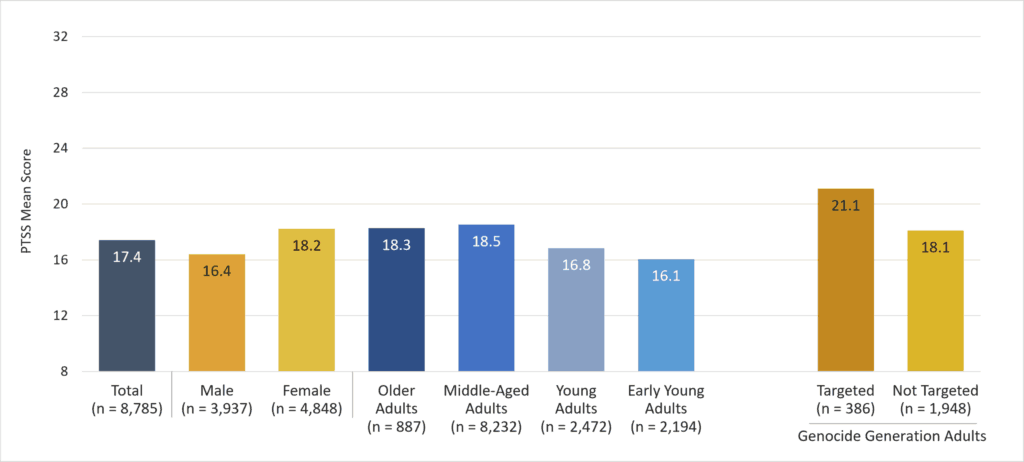
Chart Summary
The vertical bar chart presents posttraumatic stress symptoms (PTSS) mean scores across 8 demographic groups, as well as for the total sample. The vertical axis ranges from 8 to 32. The total sample (n = 8,785) has a PTSS score of 17.4. Gender groups follow: males (n = 3,937) have a mean score of 16.4, while females (n = 4,848) have a higher mean score of 18.2. Age-based categories show modest variation. Older adults (n = 887) have a mean score of 18.3, and middle-aged adults (n = 8,232) have a similar score of 18.5. Young adults (n = 2,472) show a lower score of 16.8, and early young adults (n = 2,194) have the lowest mean score at 16.1. The targeted Genocide Generation Adults (n = 386) have the highest PTSS score at 21.1, above all other groups. Non-targeted Genocide Generation Adults (n = 1,948) have a mean score of 18.1. Overall, the chart highlights demographic variation in PTSS scores, with the most elevated scores in the targeted Genocide Generation, followed by women and older age groups. Younger adults show lower PTSS scores. These findings appear in Section 6 of the report.
Figure 6.24, Posttraumatic Growth Subscale Mean Scores
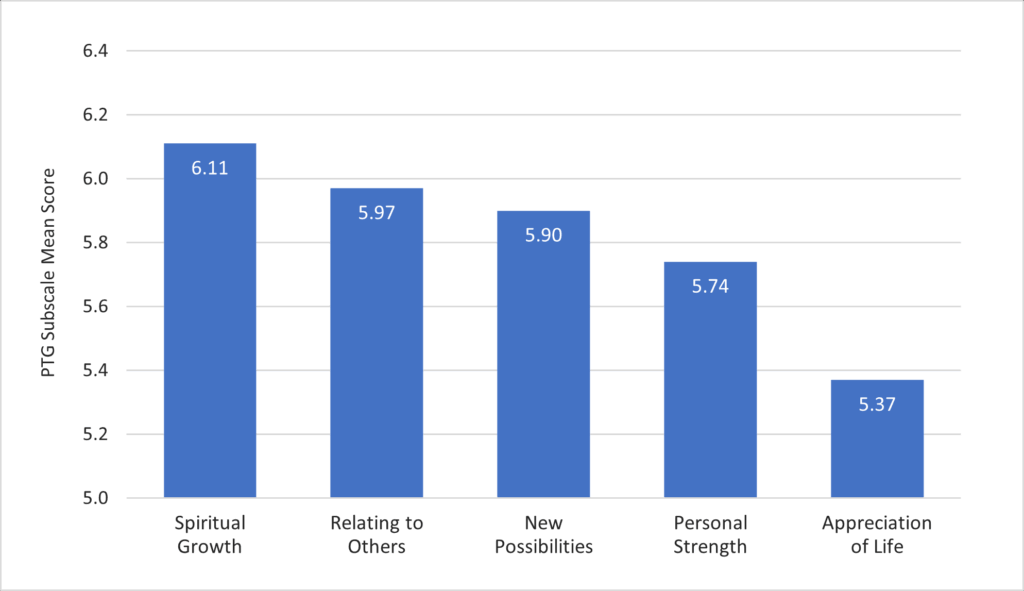
Chart Summary
The chart displays 5 vertical bars showing mean scores for subscales of posttraumatic growth (PTG): Spiritual Growth, Relating to Others, New Possibilities, Personal Strength, and Appreciation of Life. The PTG measure for each subscale could range from 0 to 8; the chart shows responses ranging from the mid to upper range, with the highest PTG score for Spiritual Growth at 6.11. This is followed by Relating to Others at 5.97 and New Possibilities at 5.90. Personal Strength is reported at 5.74, and Appreciation of Life at 5.37. All scores show positive changes after the trauma of the genocide. These findings appear in Section 6 of the report.